
Read Lake County Property Tax Records by Field
No single sheet holds a parcel's whole tax picture in Lake County. The trail runs across offices. The Property Information Viewer puts the parcel identifier, municipality, property class, State Equalized Value, taxable value, and Principal Residence Exemption percentage on one screen. The local assessing jurisdiction keeps the assessment card itself. The Lake County Treasurer keeps the county tax account and the delinquency route.
| Field | What It Shows | Where |
|---|---|---|
| SEV | Equalized assessment figure under Michigan's valuation framework | GIS and local assessor |
| Taxable value | Value used with levies to calculate tax | GIS, assessment card, tax account |
| PRE percentage | Principal Residence Exemption percentage displayed for the parcel | GIS and local assessor |
| Bill and status | Charges, payments, balance, or delinquency | County Treasurer and linked BS&A |
| Jurisdiction and class | Assessing unit, school district, and property classification | GIS, assessor, equalization reports |
Each field answers a different question. A deed's recorded consideration proves a sale happened. It does not replace the assessor's current roll. Michigan law sets true cash value and assessment under MCL 211.27, and taxable-value rules can push the tax base away from SEV.
Confirming a card takes the right office. Lake County spreads assessing across 15 townships. The county assessor directory names the township or village-linked assessor who must verify a classification, exemption, or review action.
Lake County's 50 Percent Equalization Framework
The county's 2025 Equalization Report covers appraisal and sales studies in all 15 assessing jurisdictions. County Equalization reviews property classes. It moves county totals toward Michigan's 50 percent valuation level, subject to State Tax Commission review. That work describes the whole county. Doubling a parcel's SEV to announce its market price misuses it.
A parcel question still belongs with the assessor. Class studies and ratios describe groups, not single homes. Condition, classification, transfers, exemptions, and data corrections can all pull one card away from the broad ratio. Treat the report as countywide context only.
Note: Use the equalization report for countywide context and the current assessment card for a parcel-specific tax year.
Search Fields Behind a Lake County Tax Lookup
Lake County links to a county-specific BS&A Tax & Assessing endpoint for its tax lookup. The endpoint currently returns an access error, so plan on a backup route. The vendor's guide describes the usual search modes, including name, address, and parcel number. Treat those fields as route clues. Confirm any result with the Treasurer or the correct assessor.
| Search key | Use | Verification |
|---|---|---|
| Street address | Start when the parcel number is unknown | Match municipality and situs |
| Owner name | Find an account by the roll name | Allow for spelling and update lag |
| Parcel number | Link GIS, assessor, and Treasurer | Copy the full formatted PIN |
| Tax year | Separate current and prior amounts | Confirm year and status displayed |
The county-specific BS&A link is the online route. If it fails to open, call or visit the Treasurer for tax status and reach the local assessor for the card.
The Treasurer page is where the county points users toward its tax and BS&A services.
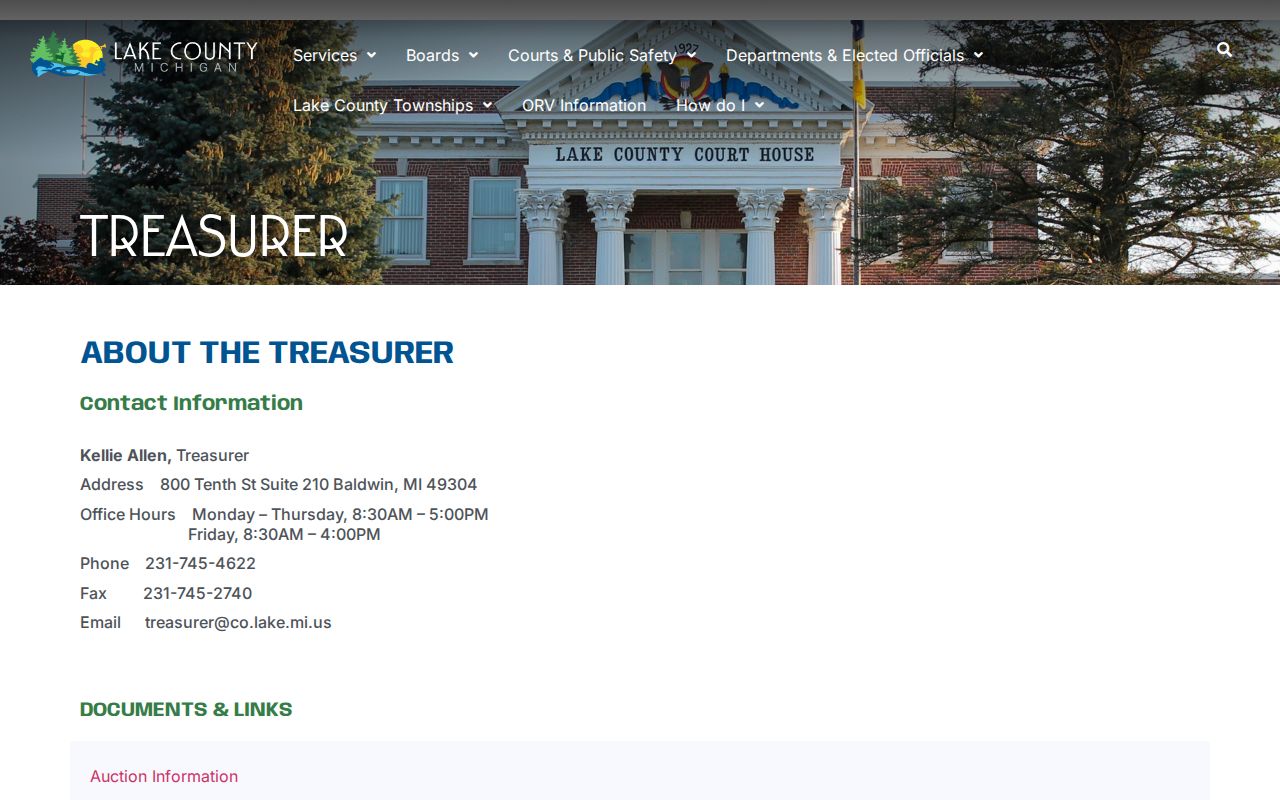
Start from that official department page. Keep the parcel number and tax year handy when contacting staff.
Trace a Lake County Tax Bill to Its Source
A sound Lake County property tax search holds the parcel's identity fixed. That identity stays fixed while you move between offices. Start in GIS when only an address is known. Then carry the full PIN into the tax system and choose the year. Set the tax account beside the assessor's value and exemption fields. Any mismatch between them usually points to a transfer. It could also point to an exemption change or review action worth asking about.
- Locate the parcel in GIS and copy
PARCELID, municipality, and situs address. - Open the Treasurer's BS&A route and search the full parcel number or address.
- Select the tax year and distinguish billed, paid, and delinquent amounts.
- Compare SEV, taxable value, class, and PRE percentage with the local assessment card.
- Contact the Treasurer for delinquency and the assessor for value or exemption corrections.
- State Equalized Value
- The equalized assessment figure, distinct from taxable value and sale price.
- Millage or levy
- A tax rate applied within the relevant taxing jurisdictions.
- Principal Residence Exemption
- A percentage field affecting school operating tax treatment, subject to assessor confirmation.
- Tax lien
- A claim arising from unpaid taxes; delinquency alone is not completed foreclosure.
The 2025 Apportionment Report gives levy context for the July and December tax bills. Board of Review changes made after publication may not appear in that report.
Lake County Exemptions Need a Current Assessor Check
The GIS layer carries a PREPERCENTAGE field. County Equalization posts materials on principal residence, disabled-veteran, qualified agricultural, and qualified forest exemptions. A displayed percentage is a lead, nothing more. Eligibility and the effective tax year live with the assessing jurisdiction.
Before calling, gather the parcel number. Bring the address, tax year, and the notice or card in question. An exemption seen in an older account does not survive a transfer automatically. A use change ends it too. Confirm it every year.
Two records, two questions. The assessment card shows classification and exemption treatment; the Treasurer's account shows what was billed and paid.
Recent Lake County Transfers Can Change Taxable Value
A transfer can uncap taxable value under MCL 211.27a. The Register of Deeds sends monthly transfer notices to assessing officials. That means a new deed, the next assessment update, and the tax account rarely change on the same day. The deed often comes first. The tax account catches up later.
After a recent sale, compare the recording date with the year on the assessment card. Ask the assessor whether the transfer was processed yet. Then ask which tax year's taxable value reflects it. Timing drives the answer.
Note: A recorded transfer may precede the next assessor or vendor refresh. Write down the date each source displays.
Delinquent Lake County Taxes Are Not Yet a Foreclosure
Delinquent taxes move through separate stages. A late balance comes first, then notices, a foreclosure judgment, a redemption period, an auction listing, and finally a deed. Label the account by the status it actually shows. The Treasurer handles delinquent-property-tax questions and posts online payment directions for owners working through a balance.
When online access fails, call the Treasurer. Give the PIN, the address, and the tax year. Ask for the amount and status as of a stated date. To settle a title question, gather the notices, the court record, and the recorded instrument yourself, since each tells a different part of the story.
Request a Missing Lake County Tax Roll or Card
Going in person works when the online tax roll does not have what you need. The local assessor can hand you a current card. The Treasurer takes tax account requests by phone or at the courthouse. For anything not posted, the Lake County FOIA process is the route. Name the PIN, situs address, and municipality. Add the tax years, record type, and how you want delivery.
FOIA rules in Lake County give the office five business days for an initial response. One extension is allowed of up to ten more. Paper copies run ten cents per page, plus actual mailing cost. Labor or deposit rules may apply.
Contest a Lake County Assessment Through the Local Board
A value dispute in Lake County begins locally. It starts with the assessing jurisdiction and its Board of Review. The state's Board of Review instructions walk through the process. Form 618 does the heavy lifting on paper. It records the owner of record, the property address, the parcel number, classification, assessed value, SEV, taxable value, grounds for the appeal, signatures. It also includes the hearing details.
Bring evidence tied to the correct valuation date. State plainly what change you want, and keep proof that you filed on time. Lake County sets no single countywide deadline covering every jurisdiction. Check current dates with the assessor for your township or city. The official Michigan Board of Review page carries the state instructions and the petition route.
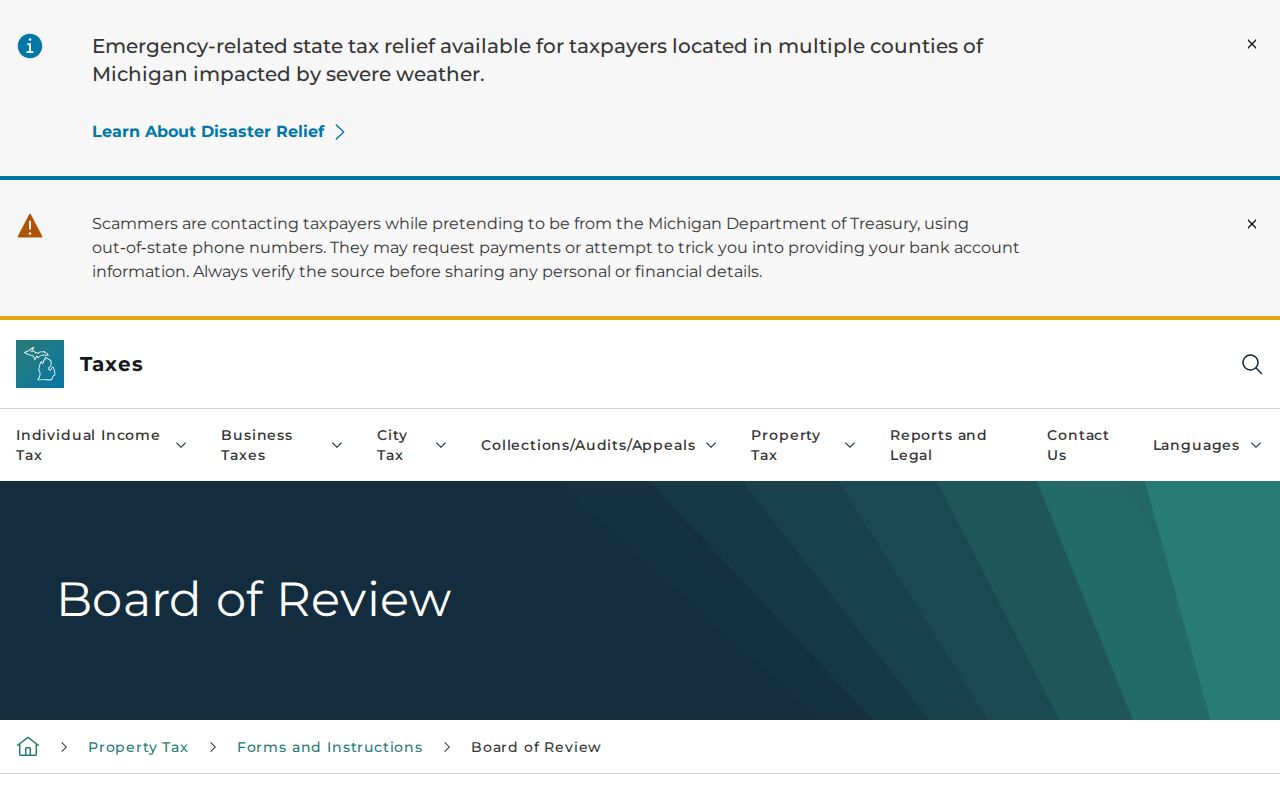
The state page is only the starting point. Your local Lake County assessing unit still sets its own meeting and filing schedule, so confirm both before relying on any date printed in a form.
Confirm the window. File first with the appropriate local Board of Review when Michigan rules require it, and verify that jurisdiction's deadline before submitting Form 618.
An appeal targets the assessment itself, not general unhappiness with a tax bill. Payment disputes belong to the Treasurer, while questions about classification, value, or exemptions start with the Lake County assessor.